Japanese Stationery Terms Explained: A Beginner’s Guide to Bungu
Have you ever browsed Japanese stationery and felt overwhelmed by unfamiliar words, labels, or descriptions? You’re not alone. Japanese stationery—often called bungu (文具)—is loved worldwide for its quality, creativity, and thoughtful design, but the language barrier can make shopping a little intimidating at first.
This guide is here to help. We’ll walk through common Japanese stationery terms, explain what they mean, and show you how to recognize them when shopping online or opening a stationery box from Japan. Even if you don’t speak Japanese at all, learning a few key words can make your stationery experience much more enjoyable.
What Does “Bungu” Mean?
Bungu (文具) simply means stationery in Japanese.
It’s a broad term that covers:
- pens and pencils
- notebooks and paper
- erasers, scissors, rulers
- planners, diaries, and accessories
If you ever see “bungu” used in product names, store categories, or descriptions, it’s a general way of saying stationery items.
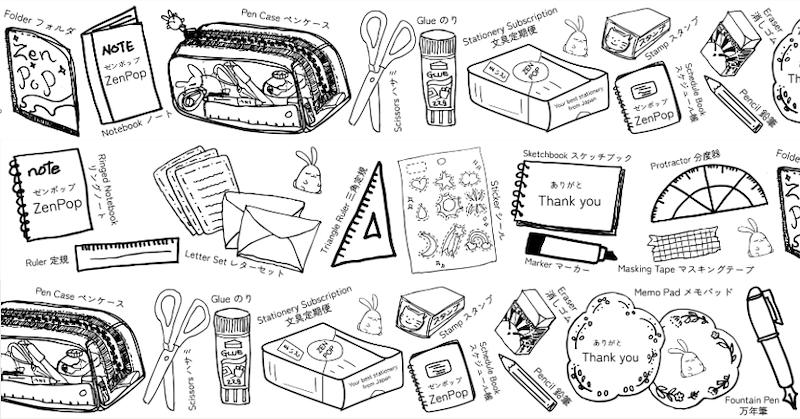
Common Japanese Stationery Words (English → Japanese)
When shopping for Japanese stationery, some products may not include English descriptions. Here are some basic terms you’re likely to encounter:
| English | Japanese (Romaji) | Japanese |
|---|---|---|
| Pencil | enpitsu | えんぴつ |
| Pen | pen | ペン |
| Mechanical Pencil | sharp pen | シャープペン |
| Scissors | hasami | はさみ |
| Stapler | hochikisu | ホチキス |
| Eraser | keshigomu | 消しゴム |
| Paper | kami | かみ |
| Washi | Washi | 和紙 |
| Sticky Note | fusen | 付箋 |
| Envelope | fuutou | 封筒 |
| Tape | teepu | テープ |
| Sticker | shiru | シール |
| Notebook | nooto | ノート |
| File Folder | fairu / clear file | ファイル |
Knowing these words can be helpful when browsing Japanese stationery shops or reading packaging with little or no English. Now that you know some basic words, we’re going to discuss some of the other terms often used in Japanese stationery.
What Is a Fude (筆)?
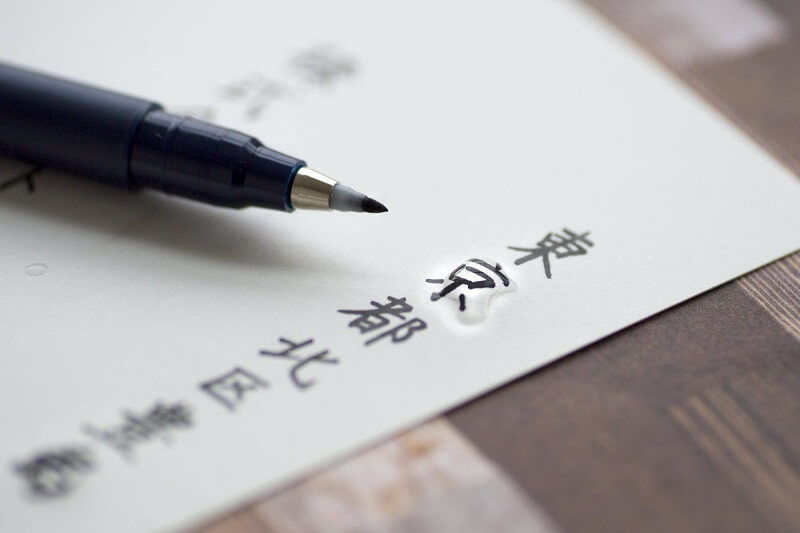
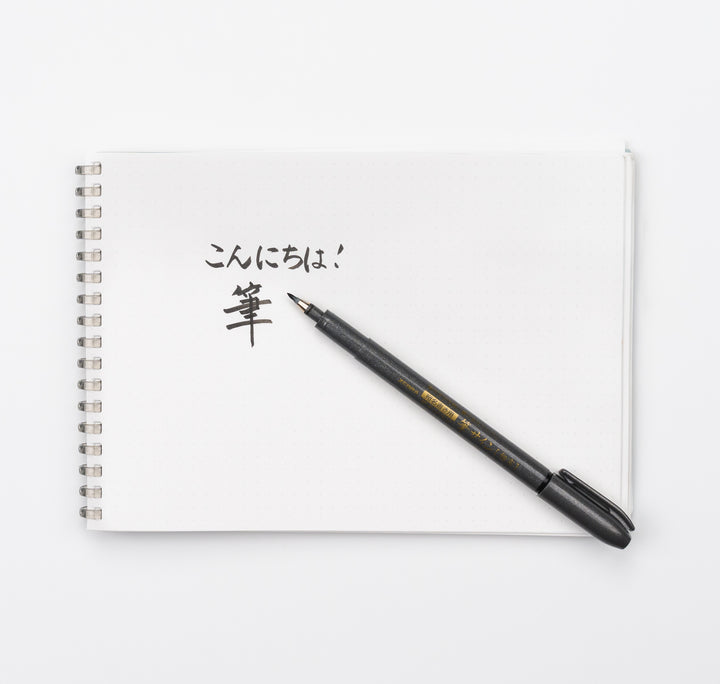
Fude means brush. In stationery, it usually refers to brush pens—pens designed to mimic traditional calligraphy brushes. You may see labels like:
- ふで
- 筆
- Fude Pen
Fude pens are commonly used for:
- practicing Japanese characters (kanji)
- calligraphy
- illustration and manga inking
- expressive lettering
- writing on pocket money envelopes for occasions such as weddings, funerals, and celebrations
They come in different tip styles, from very flexible (for experienced users) to firmer tips (better for beginners). If you’re new, look for pens described as firm or hard type.
What is Washi?
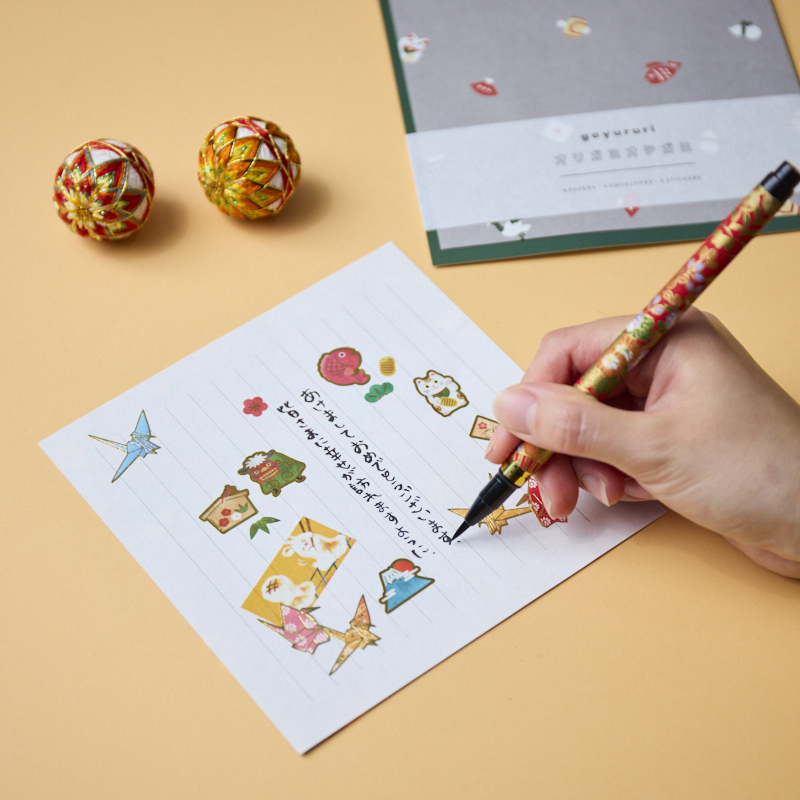
Many people recognize washi from washi tape, but the word actually refers to traditional Japanese paper. We did an entire article about Japanese washi tape, which you can check out on our blog.

Washi is known for being:
- lightweight yet strong
- flexible
- slightly textured
- pleasant to write or fold
Historically, washi was made using fibers such as kozo (mulberry) and produced in winter using pure, cold water. Today, washi is still used for:
- origami (Japanese art of paper folding)
- journaling
- calligraphy
- interior elements like shoji screens
If you see “washi” in a product name—whether it’s tape or paper—it usually means the item is inspired by or made with traditional Japanese paper techniques.
What Do Sarasara and Shikkari Mean?
These two words are often used to describe paper feel.
Sarasara (さらさら)
Means smooth.
- Describes paper that feels silky
- Ideal for fast writing
- Often paired with gel pens or smooth ballpoints
Shikkari (しっかり)
Means firm or sturdy.
- Describes thicker or grippier paper
- Better for heavy pen pressure
- Helps reduce indentations and bleed-through
If you care about how paper feels when you write, these two words are especially useful.
What Is a Shitajiki (下敷き)?
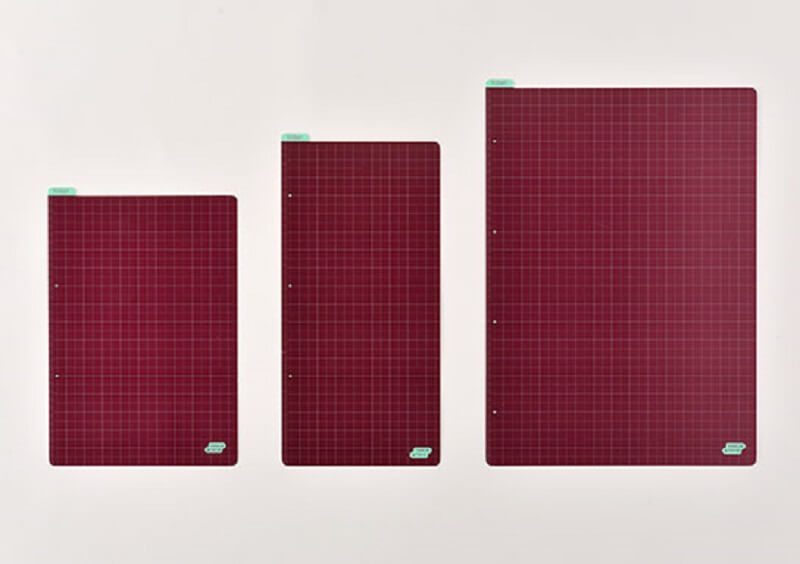
A shitajiki is a pencil board—a flat sheet placed under your paper while writing.
It helps by:
- preventing marks on the page underneath
- reducing ink bleed-through
- creating a smoother writing surface
Shitajiki are popular in Japan among students and writers, especially those who press hard when writing.
What Are Techo (手帳) and Nikki (日記)?
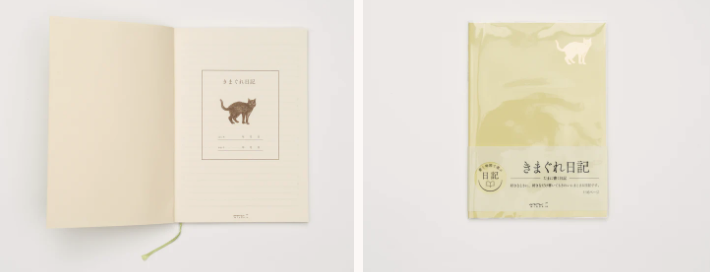
These two words often appear on planners and journals.
- Nikki = diary or journal: used for daily writing, reflections, memory keeping
- Techo = planner: used for scheduling, tasks, and planning
The distinction isn’t strict, but it’s helpful when choosing notebooks or accessories meant for planning versus journaling.
Why Learning These Terms Helps
You don’t need to know Japanese to enjoy Japanese stationery—but understanding a few common bungu terms can:
- make shopping easier
- help you choose the right tools
- deepen your appreciation for the design and intent behind each item
Whether you’re browsing online, receiving a stationery box, or exploring Japanese stationery for the first time, these words give you a small but meaningful window into the culture behind the products.
So… What’s Your Next Bungu?
Now that you’ve learned some of the most common Japanese stationery (bungu) terms, what will you explore next? Maybe it’s trying a new pen, choosing paper based on how it feels, or noticing small details on packaging that suddenly make sense.
Japanese stationery rewards curiosity—each tool has a purpose, a story, and a way of fitting into everyday life. The next time you come across a new item, you might find yourself understanding it just a little more deeply. Where will your stationery journey take you next?
If you’re ready to take the next step, you can explore a curated selection of Japanese stationery in our store, from pens and paper to notebooks and small tools.
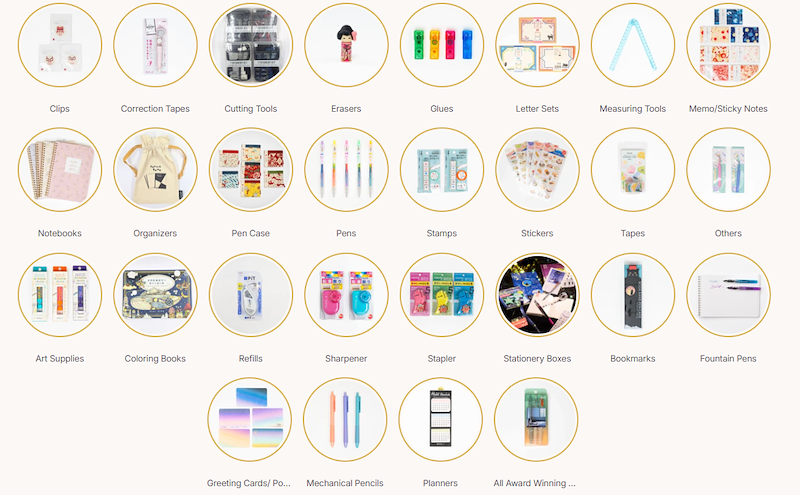
Or, if you’d like to discover stationery gradually, our subscription box delivers a thoughtful mix of Japanese items to your door—an easy way to experience how bungu fits into daily life in Japan. Where will your stationery journey take you next?