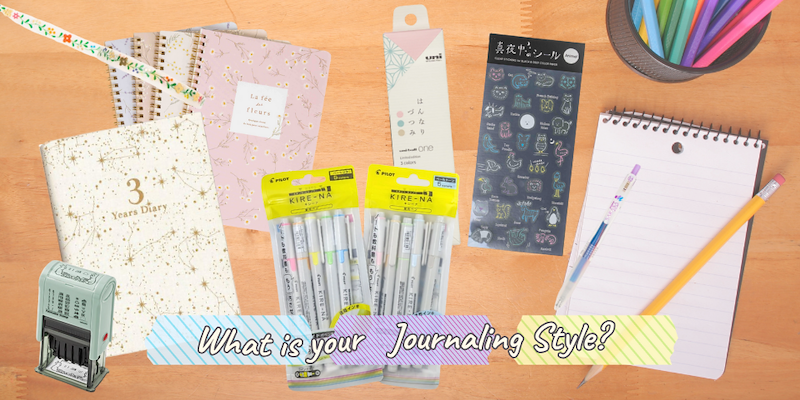
How to Start a Journal: Simple Styles to Find What Works for You
Starting a journal often feels harder than it sounds. I've been there, bought a new notebook, a new pen, and turned over the first page...but what should I write?
Suddenly, the page feels very quiet.
Should it be meaningful? Consistent? Beautiful? If you’ve ever felt stuck like this, you’re not alone.
The truth is, journaling isn’t about having the right words. It’s about creating a small, personal space where thoughts can land gently—without pressure, expectations, or rules.
There’s no single correct way to journal. Some pages are neat. Some are messy. Some are only a few lines long. All of them count.
Many people imagine journaling as daily, thoughtful writing filled with insight. In reality, journaling works best when it feels easy to return to. There are also many popular prompt journaling methods, such as the 3-2-1 Method (3 joys, 2 self-appreciations, 1 memory) and the 3-3-3 Journal Method (use 3 simple prompts, write for 3 minutes, 3 times per day). Once you start testing different methods, you'll figure out which one suits you the most.
You don’t need a perfect system to start journaling. You only need a reason—however small.
That reason might be:
- To clear your head
- To slow down
- To remember small moments
- To feel a little more grounded
Once you know why you want to start journaling, the how becomes much softer.
This guide will help you explore:
-
Different journaling styles
-
What kind of personality, goals, or lifestyle each style suits
-
A quick and gentle way to begin, even if you don’t know what to write yet
Below are the journal styles we’re introducing in this blog. You don’t need to choose just one. Many people move between styles depending on their season of life, mood, or energy level.
- Free Writing Journal
- Prompt-Based Journal
- Gratitude Journal
- Bullet Journal
- Creative or Visual Journal (Scrapbooking)
- Reflection or Goal Journal
Different Journaling Styles (And Who They’re For)

1. Free Writing Journal: For minds that are always a little busy
This style is simple: write whatever comes to mind, without fixing or judging it.
Good fit if you…
- Think a lot
- Feel overwhelmed or restless
- Want to clear mental clutter
Supports
- Stress relief
- Emotional processing
- Self-awareness
How to start
- “Right now, my thoughts feel like…”
- Set a 5-minute timer and keep writing
This journal doesn’t need to be reread. It’s more like a quiet exhale.
2. Prompt-Based Journal: For when the blank page feels intimidating
Using prompts gives your writing a gentle direction.
Good fit if you…
- Are new to journaling
- Like a little structure
- Want guidance without pressure
Supports
- Reflection
- Habit-building
- Personal insight
Example prompts
- “Something small I enjoyed today…”
- “Lately, I’ve been thinking about…”
You can reuse the same prompt again and again—each answer will be different.
3. Gratitude Journal: For noticing quiet, everyday goodness
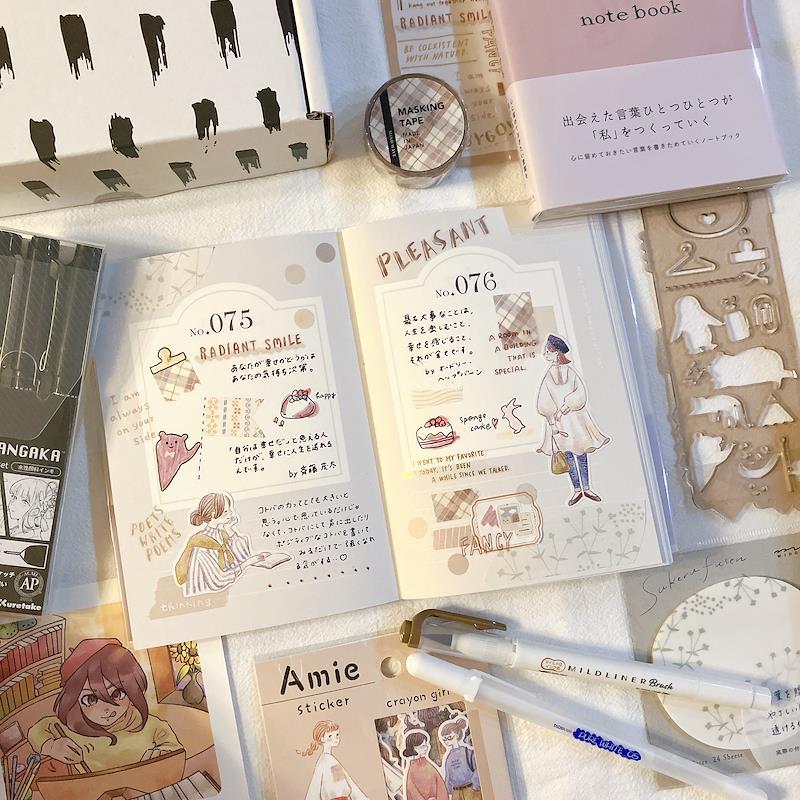
This style focuses on small moments worth remembering.
Good fit if you…
- Want a calmer mindset
- Feel emotionally tired
- Prefer short entries
Supports
- Mindfulness
- Emotional balance
- A gentler perspective
You only need one line. On difficult days, even “I rested” is enough.
4. Bullet Journal (Functional Style): For practical minds and busy days
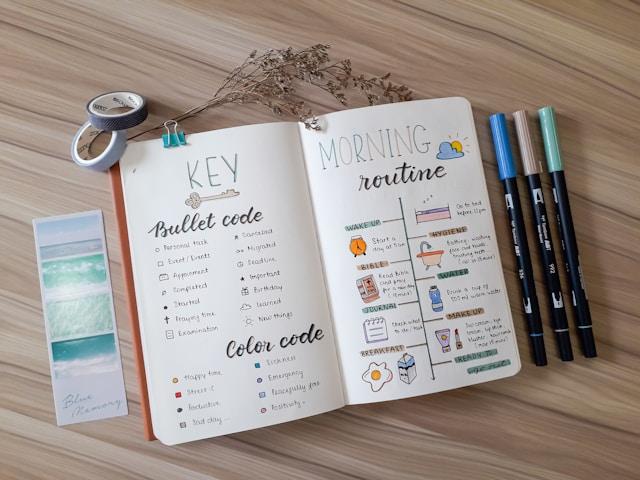
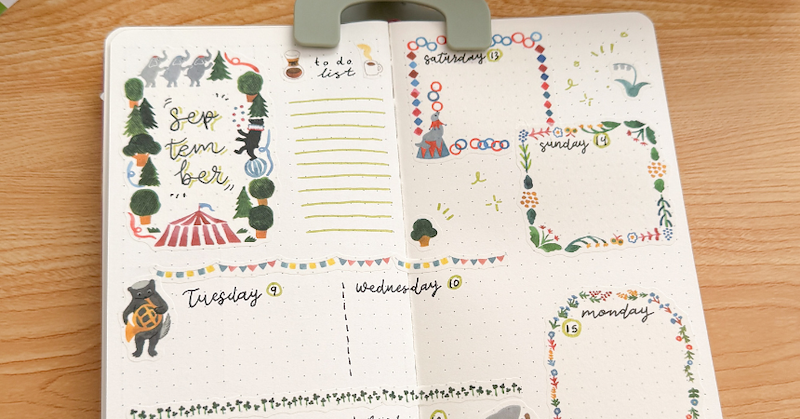
This style blends planning with reflection using short notes and lists.
Good fit if you…
- Love lists
- Like staying organized
- Want journaling to feel useful
Supports
- Productivity
- Habit tracking
- Mental clarity
This doesn’t have to be decorative. Simple, honest lists work beautifully.
5. Creative or Visual Journal (Scrapbooking Style): For expressing without words
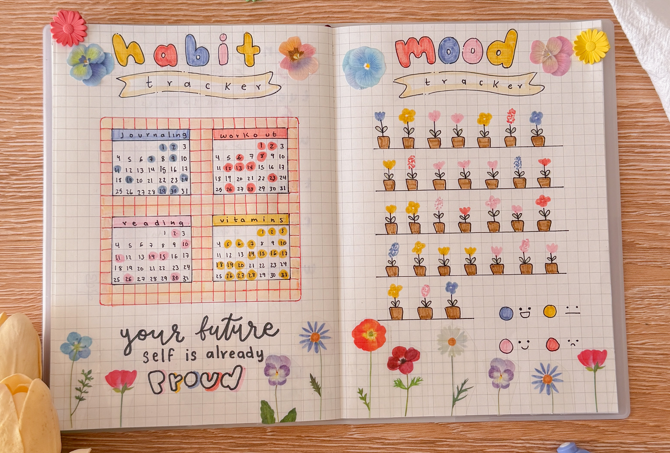
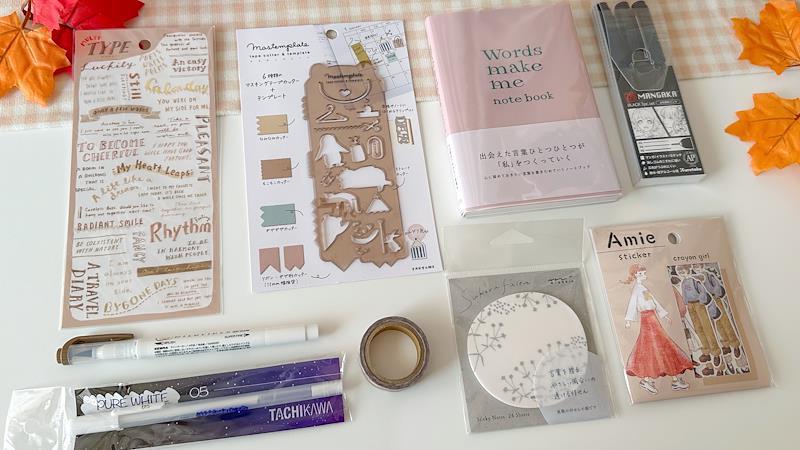
A creative journal doesn’t rely only on words. It uses photos, paper, color, texture, and small objects to tell a story. This style is often called scrapbook journaling, but it doesn’t have to be elaborate or “perfect.” One decorated page, a ticket stub, or a handwritten note can be enough.
Good fit if you…
- Think visually
- Enjoy crafting or hands-on creativity
- Want to capture memories beyond words
Supports
- Emotional expression
- Creativity
- Playfulness and memory-keeping
5.1 Choosing a Journal for Scrapbook-Style Journaling
Not all journals work the same way for scrapbook-style journaling. The binding affects how easily you can add layers, photos, or keepsakes. Here are a few common options:
- Ring or post-bound journals
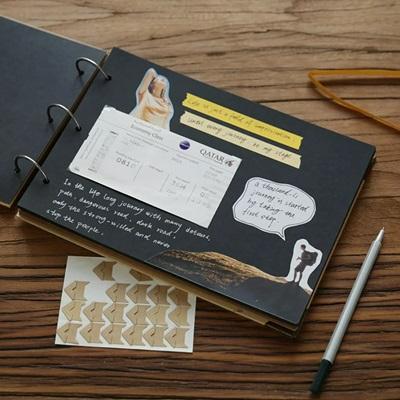
Flexible and expandable. Good if you like rearranging pages or adding thicker elements.
- Spiral-bound journals
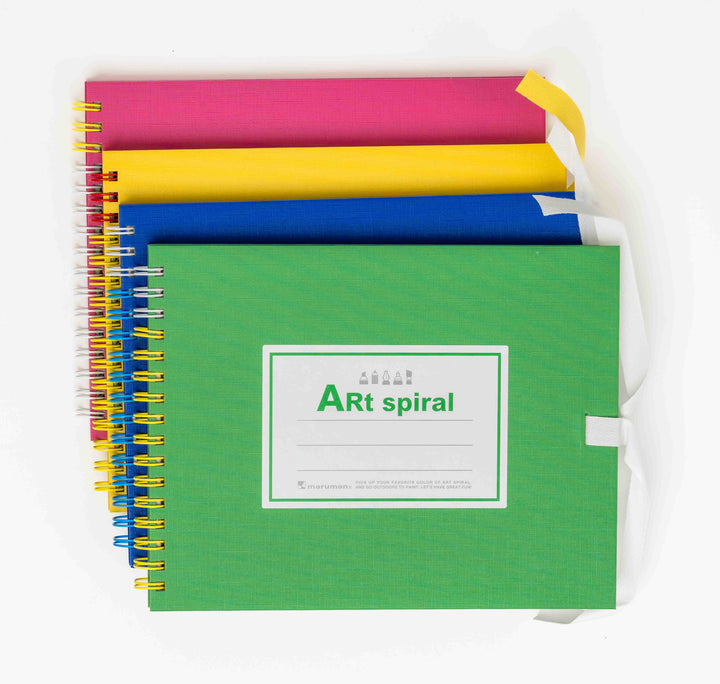
Easy to work in and lay flat. Lightweight and great for casual or travel journaling, though pages are harder to remove.
Shop Now
- Strap-hinge or fixed-bound journals
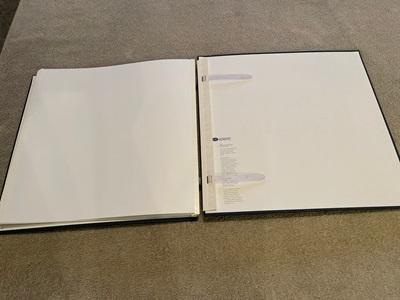
More permanent and structured. Best if you prefer keeping pages in place once finished.
There’s no “best” choice. The right journal is the one that fits how you like to work and how often you plan to return to it.
5.2 Gentle Scrapbooking Tips (Without the Pressure)
You don’t need professional techniques to make meaningful pages. A few gentle principles can help your journal feel more balanced and enjoyable.
-
Choose a loose theme
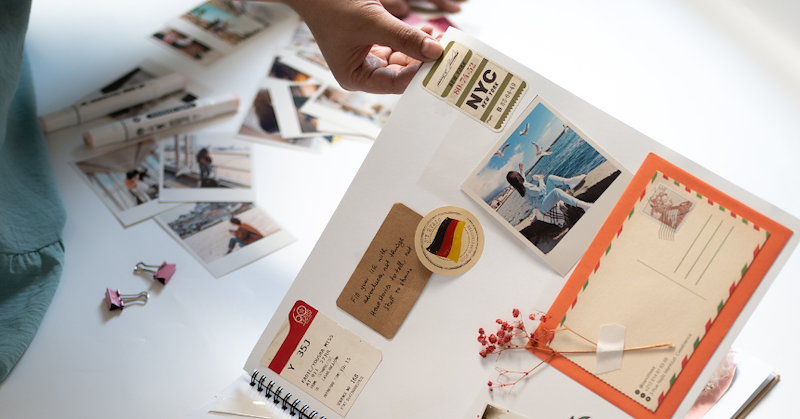
One feeling, one moment, or one memory is enough. -
Let one element lead

A photo, a note, or a small object can guide the rest of the page. -
Leave breathing room
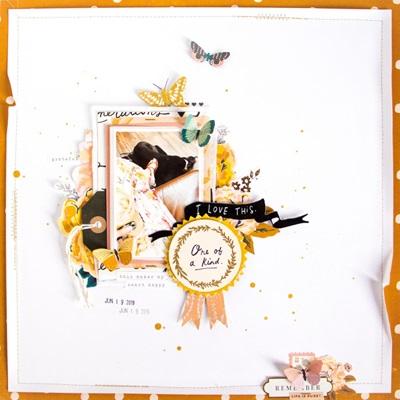
White space helps your page feel calm, not unfinished. -
Use what you already have
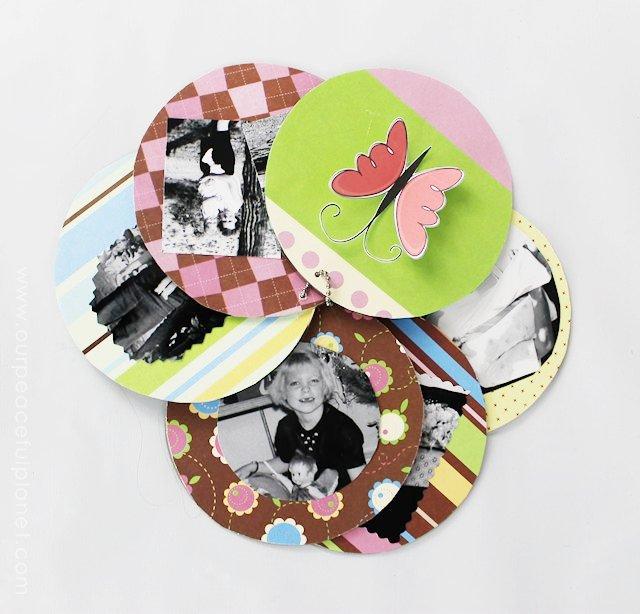
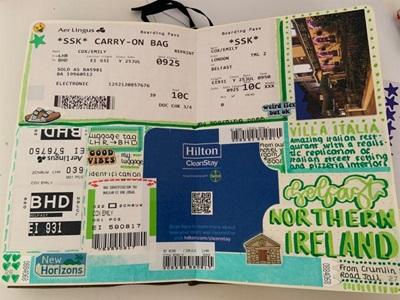
Receipts, tickets, packaging, or handwritten notes often feel more personal than store-bought decorations. -
Mix handwriting styles naturally
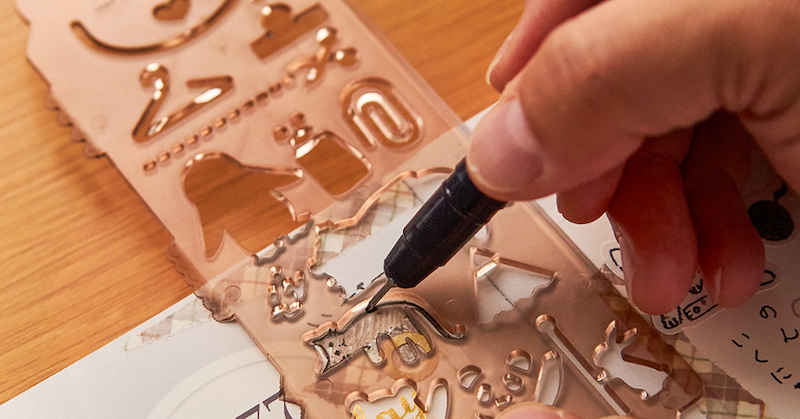
Your own handwriting, small notes, or simple lettering add warmth without effort.
Think of scrapbooking as collecting moments, not decorating pages.
5.3 Scrapbooking Without Photos
Not every memory needs a photo. A creative journal page can be built from:
- Maps or travel brochures
- Tickets, receipts, or labels
- Short reflections or lists
- Colors or textures that match the mood
These pages often feel more intimate because they capture how a moment felt, not just how it looked.
6. Reflection or Goal Journal: For gentle self-check-ins
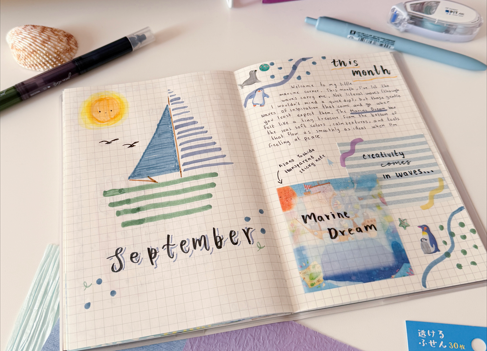
This style looks back and forward with intention.
Good fit if you…
- Enjoy reflecting
- Like seeing progress over time
- Prefer weekly or monthly journaling
Supports
- Self-growth
- Motivation
- Direction
Try prompts like
- “Something I learned recently…”
- “What I want more of this month…”
If you're still not sure which journaling style you should test out, take our 1-minute "What Jounaling Style Are You?" quiz to find out!
Happy Journaling! Shop our recommended collection for starting your journaling adventure with a limited discount going on now.